Automotive retail | Legacy ERP automation
MetricsAn automotive dealership group moved routine legacy-ERP entry out of manual work
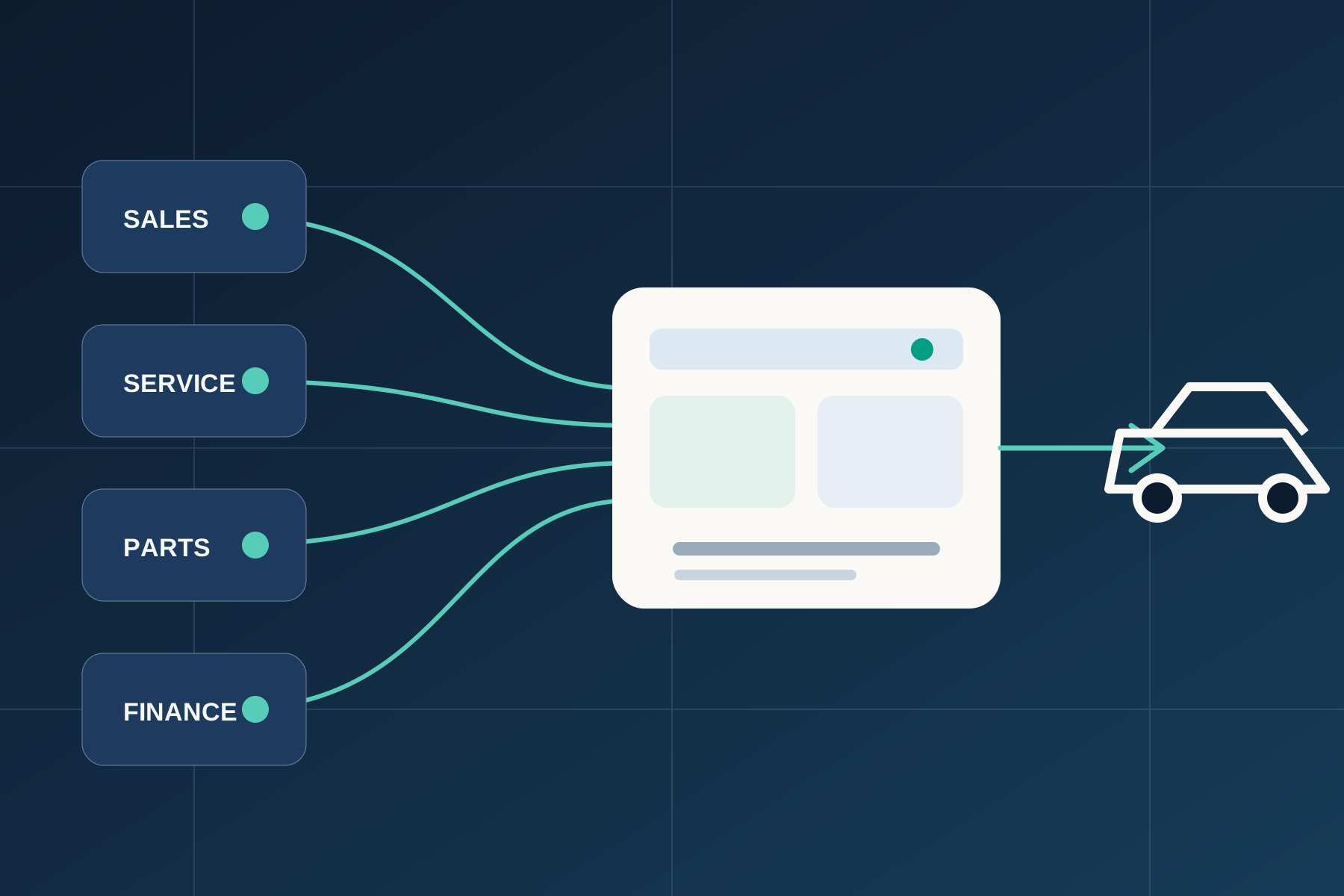
UI automation and bounded AI agents connect sales, service, parts, finance, and delivery work around a legacy dealer-management system—without a risky replacement programme.
Routine entry moves out of every department
A secure automation layer can prepare and complete repeatable updates across prospect, vehicle, service, parts, warranty, finance, and delivery work, leaving people to review exceptions.
AI agents work from evidence, not guesswork
Agents can classify documents, extract structured information, prepare the next action, and route uncertainty to the accountable person with the source record attached.
Designed around an 80% manual-entry reduction goal
The operating target is to remove roughly 80% of repeat keying and status chasing while retaining dealer controls, approvals, and a complete audit history.
A legacy dealership ERP can run the business and still leave work between systems
A multi-franchise dealership may rely on a long-standing dealer-management system for vehicle records, repair orders, parts, finance documents, warranty activity, and accounting. It remains essential, but staff often re-enter the same customer, vehicle, appointment, and status information from email, calls, spreadsheets, OEM portals, insurers, and scanned paperwork.
The hidden cost is not only data entry. A sales coordinator waits for finance status, a service advisor checks another portal, parts staff chase a delivery date, and a delivery team rebuilds a handover pack. The ERP shows a transaction; the people carry the operation between transactions.
UI automation can extend a legacy ERP without replacing it
This story uses a controlled UI-automation layer to work through the same approved screens a trained user would use. It reads a source document or structured handoff, prepares the update, completes only the permitted repeatable actions, and records what happened. The existing ERP stays the system of record.
The design is deliberately bounded: credentials are scoped, critical actions require the right approval, source evidence is retained, and a failed or uncertain step becomes a visible queue rather than a silent retry. That makes the automation useful in an older environment without treating it as an uncontrolled robot.
Specialized AI agents prepare each department’s work
A sales-intake agent can turn an enquiry and vehicle preference into a prepared CRM and ERP record. A service agent can summarize a customer conversation, identify the vehicle and concern, and prepare the repair-order context. A parts agent can reconcile a supplier update with an open job, while a finance agent can check whether a handover pack has its required documents.
None of these agents should decide a discount, approve finance, authorize a warranty claim, or change a customer commitment alone. Their job is to assemble the right context, complete repeatable data movement, and show the person responsible exactly what needs judgment.
The dealership gets one visible operating history
The result is a shared layer over the legacy ERP: one record of the source, the automation run, the human review, the ERP update, and the next accountable action. Leaders can see where manual work remains, which exceptions recur, and where a process needs redesign rather than more automation.
A real engagement would begin by measuring repeat-entry volume, exception patterns, controls, and the practical definition of the 80% reduction target department by department.