Skip to content
Busy kitchen staff preparing orders at a commercial kitchen pass

Customer lifecycle

Customer Lifecycle Automation & Conversational AI

Keep the customer context. Move the work forward.

Discuss your workflow

The operation, connected

Keep the customer context. Move the work forward.

Aiwah builds customer lifecycle automation that connects the conversation to the work behind it. Voice, WhatsApp, email and web chat can share customer history, booking information, service requests and next actions. We build conversational AI and customer-service software that helps people get something resolved, with clear handoffs whenever human judgment is needed.

Customers experience one business, even when your team operates five separate queues. A phone call becomes a WhatsApp message, then an email, and the customer repeats the story at every handoff. A chatbot that answers questions without updating the underlying operation leaves the hard work untouched. We connect intake, action, escalation and follow-through around one customer record.

  • Customer conversations lose context when they move between channels or teams.
  • Booking, order updates and simple service requests require repeated manual coordination.
  • Support teams spend time reconstructing histories instead of resolving the next problem.

What we can build

Purpose-built capabilities.
One connected system.

Scope the combination that solves your operating problem, with clear responsibilities for software and people.

01

Omnichannel customer intake

Bring voice, WhatsApp, email and chat into a consistent request model. Capture identity, intent, attachments, conversation history and account context without forcing customers into a new channel. Define identity matching carefully so unrelated people or records are not merged simply because their names look similar.

02

AI voice agents and conversational workflows

Design assistants for a defined service task: collect details, answer from approved information, check a status or prepare a booking. Connect actions to authorized tools and record the result. Low-confidence answers, sensitive conversations and requests outside the supported scope move to a person with context attached.

03

Booking and appointment automation

Connect enquiry, availability, appointment details, confirmation, reminders and rescheduling. Booking rules can account for staff capacity, location, service type and required information. A confirmed slot must come from the booking system; the assistant should never invent availability or promise an appointment that was not recorded.

04

Customer onboarding and service portals

Build guided intake, document collection, requirement confirmation and customer-facing status pages. Teams and customers work from the same underlying record with different access permissions. Missing information, pending approvals and next steps stay visible, reducing repeated requests and avoidable back-and-forth.

05

Support triage and human escalation

Classify requests, suggest priority and route work to an accountable queue using approved service information. An escalation includes the transcript, customer history, attempted actions and reason for review. Staff can correct the interpretation and continue the conversation without asking the customer to start again.

06

Retention and lifecycle follow-up

Use completed services, previous orders and customer preferences to prepare relevant reminders and follow-up. Connect loyalty and renewal workflows to actual history. Respect communication preferences and approval rules, and measure whether the message helped a customer return or resolve unfinished work rather than counting sends alone.

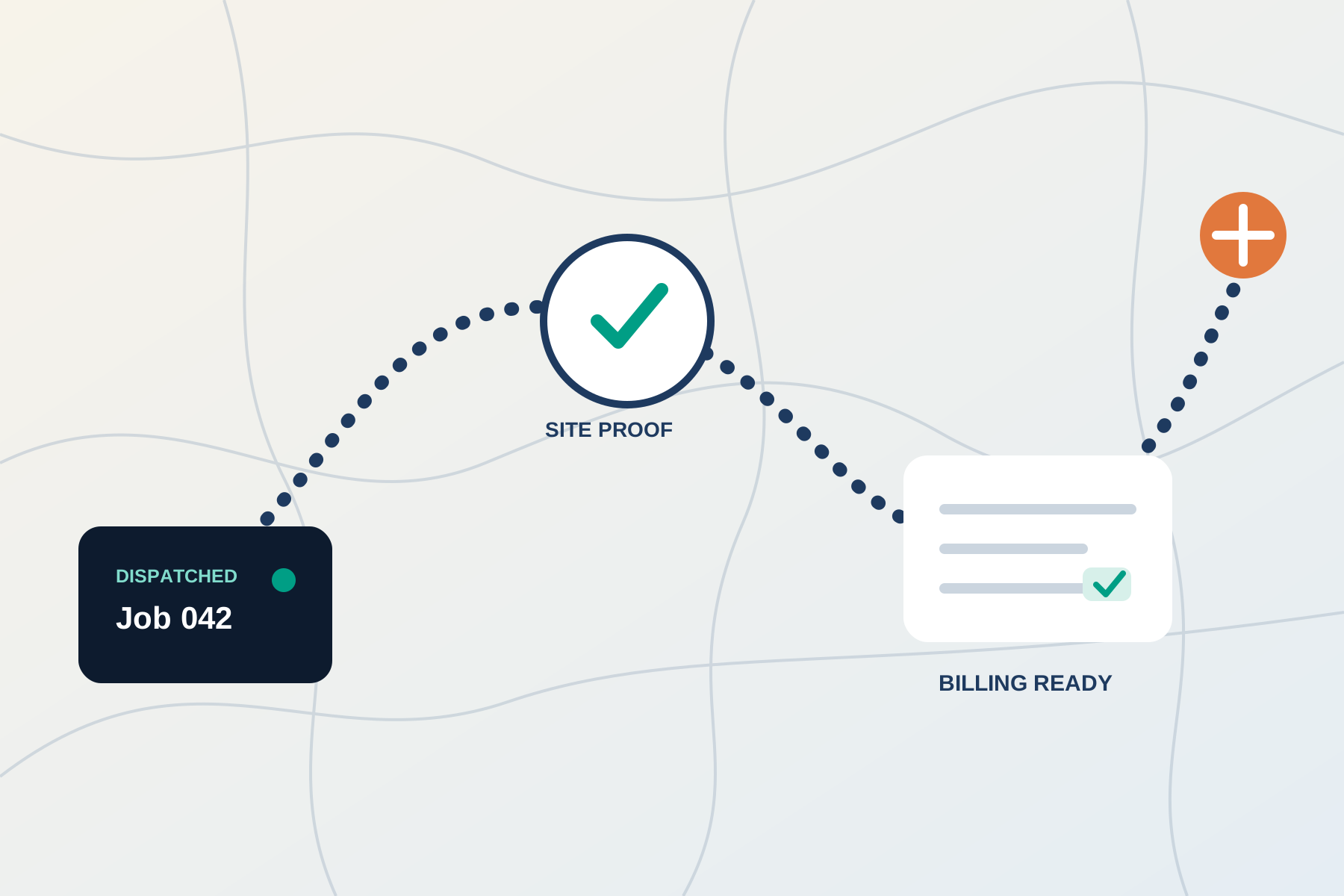
Customer context viewOne customer history across every channel.

The request, approved action and human escalation travel together.

An example workflow

From the first signal
to the next accountable action.

This is a starting point for design. The actual workflow, permissions and integrations are scoped around your operation.

  1. 01

    Listen in the preferred channel

    The customer calls, messages or emails. The request is captured with the original conversation and available customer history.

  2. 02

    Understand the next action

    The system checks approved knowledge and gathers the details needed for a booking, order, answer or service request.

  3. 03

    Act or escalate

    Authorized routine actions update the source system. Exceptions reach a person with the reason and supporting record.

  4. 04

    Follow through

    Confirmation, status updates and relevant follow-up stay connected to the same customer and completed service.

Works with your existing tools

Connect the systems that already matter.

Customer workflows can connect WhatsApp Business, telephony, shared email, CRM, calendars, booking systems, support platforms and order-management tools. We assess provider access, messaging policies, identity matching and the permitted actions before implementation. Existing customer channels can remain in place while the operating system behind them improves.

Measures we can define together

  • Time to first useful response
  • Request resolution time
  • Escalation quality
  • Booking and repeat-service conversion

We establish a baseline and agree a measurement method. Results depend on your process, data and adoption; these are measures to track, not promised outcomes.

From discovery to live operation

A team responsible for the system, not just the handoff.

We begin with a working session around a real example. We map the workflow, identify the costly handoffs and agree the decisions, permissions and integrations the system needs.

We then shape a focused first release, build the operating interfaces and test routine work alongside exceptions and failure recovery. Rollout includes the people using the system and a way to observe whether the change is helping.

You keep practical control of the code, workflows, business logic, data and operating context we create, subject to third-party services and licences. Support and continued improvement are scoped with the engagement.

Read about security and controls →

Before we begin

Your questions,
answered clearly.

Can customers keep using WhatsApp or phone?

Yes, where the channel provider supports the required integration. The objective is to improve the work behind the conversation. We can preserve familiar channels while giving your team a shared record and controlled actions in the systems that deliver the service.

What happens when an AI agent is unsure?

The workflow defines review conditions and escalation ownership. An uncertain request should reach a person with the transcript, relevant knowledge and attempted steps. We test those boundaries as part of the service flow, including unsupported requests and failed tool calls.

Is this only a customer-support chatbot?

No. The scope can include enquiry, qualification, onboarding, booking, ordering, support and retention. A conversational interface is one surface. The underlying customer record, integrations, task ownership and follow-through are what make it an operational system.

Explore connected services

Revenue and sales operationsOperations and service deliveryKnowledge and back officeAI discovery & roadmapLegacy modernizationPlatform rebuildAI operations redesignAI for engineering teams

Bring one important workflow

What should work better
in your business?

Tell us where the operation slows down, what your team is doing manually and what a better result would look like.

Book a meeting