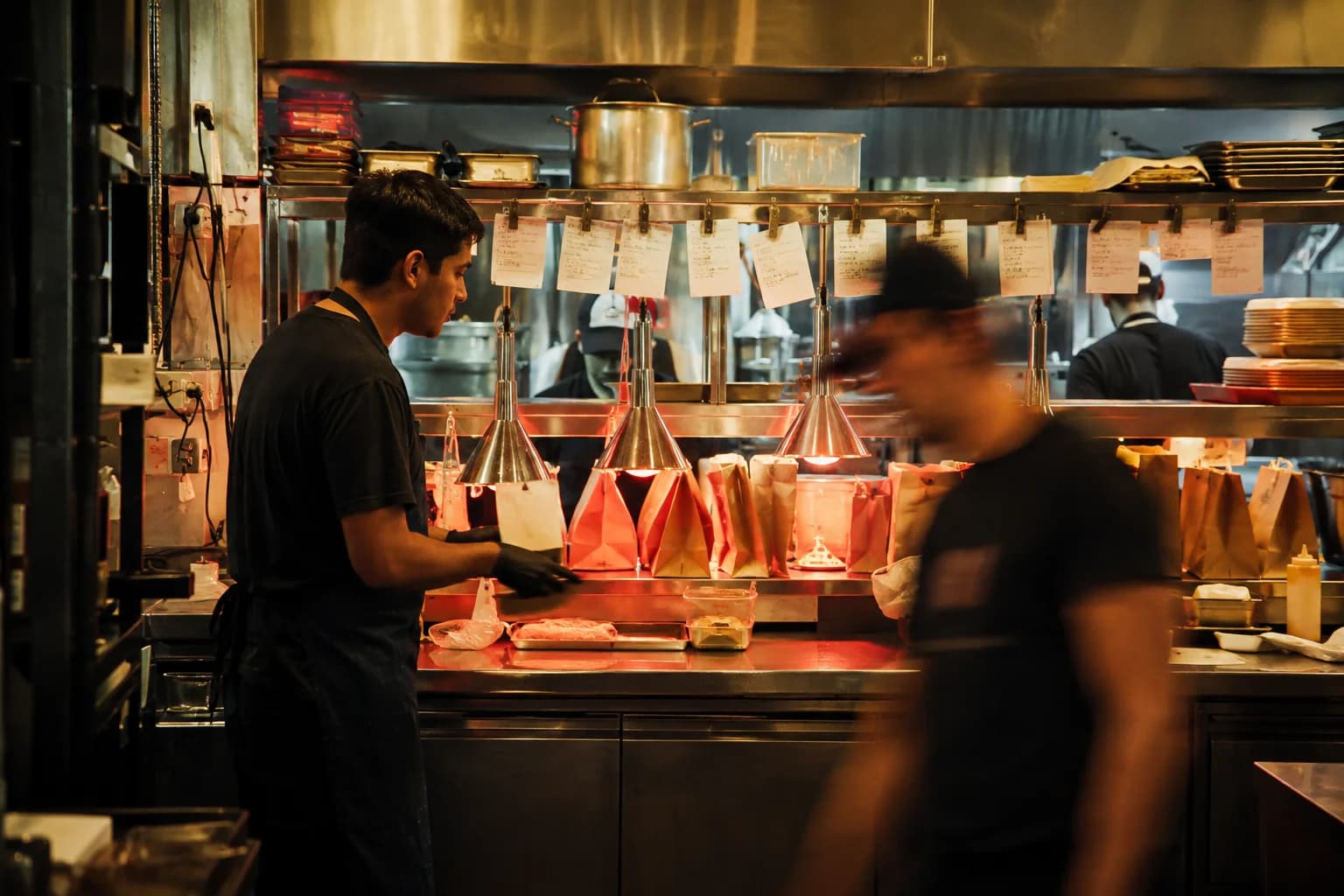
Food delivery | WhatsApp order operations
MetricsFlavoBox brought 1,000+ WhatsApp threads into one delivery operation without forcing customers into an app
FlavoBox used an AI-assisted WhatsApp layer and a private delivery app to capture orders, handle updates, coordinate dispatch, and preserve the customer behaviour that already worked.
Customers remain where they already order
The operation keeps WhatsApp as the familiar front door instead of asking every customer or community group to adopt a new ordering app overnight.
AI agents structure orders and the conversation
Agents can recognize menu intent, check cutoff and delivery zone rules, resolve common questions, prepare orders, and route exceptions to a human with the relevant chat attached.
The delivery app runs the internal operation
Kitchen production, rider allocation, order status, delivery proof, refunds, and customer updates can operate from one private control layer behind WhatsApp.
The customer channel was valuable, but operationally fragmented
A community kitchen may grow through neighbourhood, residential, office, and family WhatsApp groups. With more than 1,000 active WhatsApp threads, that reach is an asset: customers already know how to ask a question, see the menu, and place a repeat order. Moving everyone to an app risks losing precisely the convenience that created demand.
But an order hidden in a conversation still has to be read, clarified, entered, paid for, prepared, assigned, delivered, and updated. Without a shared operation behind it, kitchen teams end up copying messages, missing customizations, chasing payment proof, and asking customers for status one by one.
WhatsApp becomes a controlled order-intake layer
An AI-assisted WhatsApp agent can identify an order request, ask only the missing questions, recognize menu items and substitutions, check a delivery zone and cutoff, and prepare the structured order for confirmation. It can send accurate status updates from the internal order record instead of inventing an answer from chat history.
The automation must know when to stop. Allergy questions, unusual requests, disputed payments, unavailable items, delivery failures, and any unclear instruction are routed to a person with the conversation and order context ready for review.
The private app gives kitchen and delivery teams one working record
Behind the familiar WhatsApp experience, a delivery app gives kitchen staff a production queue, packs each order with its customer instructions, and makes rider handoff and delivery status visible. Dispatch can group orders by route, while managers can see demand, cutoffs, preparation delays, rider capacity, cancellations, and repeat-order patterns.
The app can also create a gradual path for customers who prefer self-service: a link to a lightweight menu and re-order flow is available when useful, but the core operation does not require a sudden customer migration.
The gradual change protects the relationship while improving control
The operating measure is not app-download count. It is whether customers receive a reliable answer, kitchen teams receive a complete order, deliveries carry the right evidence, and the business can see where work and margin leak across the journey.
A real implementation would start with menu logic, group permissions, payment rails, delivery geography, food-safety practices, peak capacity, and the human escalation plan.